Trickbot is not a new threat, but it is an evolving one. The latest twist of the banking Trojan knife as far as Windows 10 users are concerned is the addition of new methods to not only evade but actually disable Windows Defender security protection. As reported on July 14 in Forbes , Trickbot is a particularly stealthy banking Trojan that has been around since 2016. Since then, it was thought to have compromised no less than 250 million email accounts in an effort to distribute the malware payload. That payload includes the stealing of online banking credentials and cryptocurrency wallets. Microsoft has always been front and center as far as Trickbot attack campaigns are concerned, with weaponized Word and Excel files being a favored approach. The latest campaign is targeting Windows 10 users and implementing a highly detailed and convincing, but fake nonetheless, Office 365 page to prompt for browser updates that install the Trojan itself. Disab...

Primer: What Is a Universal JavaScript Application?
First, I'll provide a little context for the individuals that find Universal JavaScript to be a new term.
The term Universal simply means the ability to run the same code on the server, browsers, mobile devices, and any other platform. Universal JavaScript is a term people are leaning towards these days. A lot of developers also call it Isomorphic JavaScript. In short, there is a debate on the React repo about this term. Michael Jackson, a popular ReactJS developer, wrote a blog post on Universal JavaScript. It's indeed true that naming things is one of the most difficult aspects of Computer Science.
What's New in Next.js 3.0?
1. Dynamic Import Support
Next.js now ships with Dynamic Import. The import function in all its glory allows a codebase to be split into a set of chunks that can be dynamically loaded later.
In Next.js, you can now use dynamic import as seen below:
This helps to load functionality on demand. Next.js supports server-side rendering for dynamic imports which makes it incredibly awesome for you to avoid displaying the client's blank pages, flickering, or loading spinners.
2. Static Export Support
Next.js now allows you to generate a truly static site by exporting your project to an
outdirectory with .html and .css files. The good thing about this feature is that it was community-driven.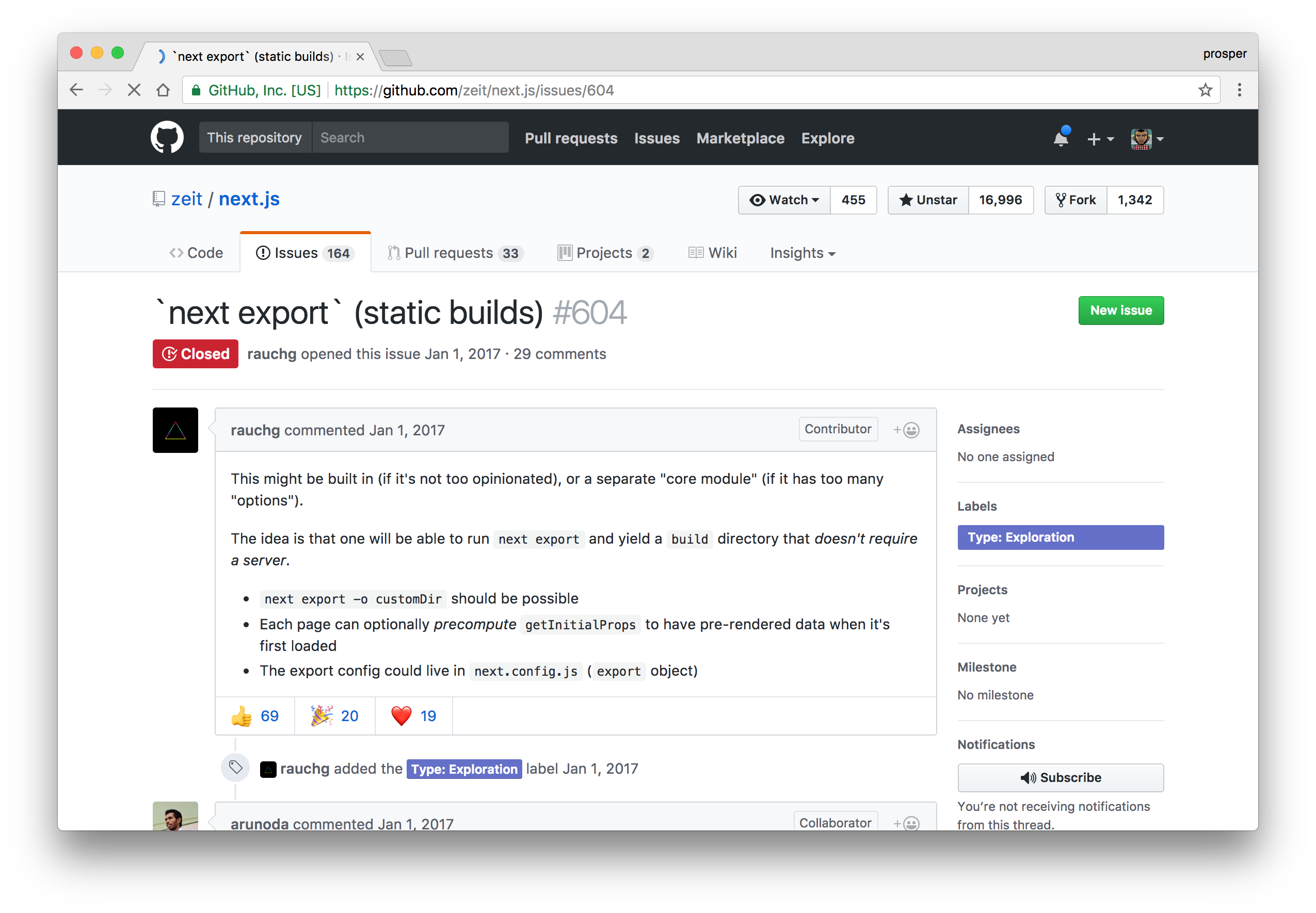 Community Driven Static Export feature
You need to do the following:
- Create a custom next.config.js file like so:
- Now run the command like so:
Note: It's advisable you configure the command in your package.json file like so:
So you can just run
npm run export and it will build your Next.js app as a static website. This simply means you don't need any server to deploy it. Whoop! Whoop!
Change the directory into the new
outdirectory and deploy your app to a cloud platform, e.g [now](https://zeit.co/now).3. Better Error Handling
The error color theme has been updated to be more accessible and easier on the eyes.
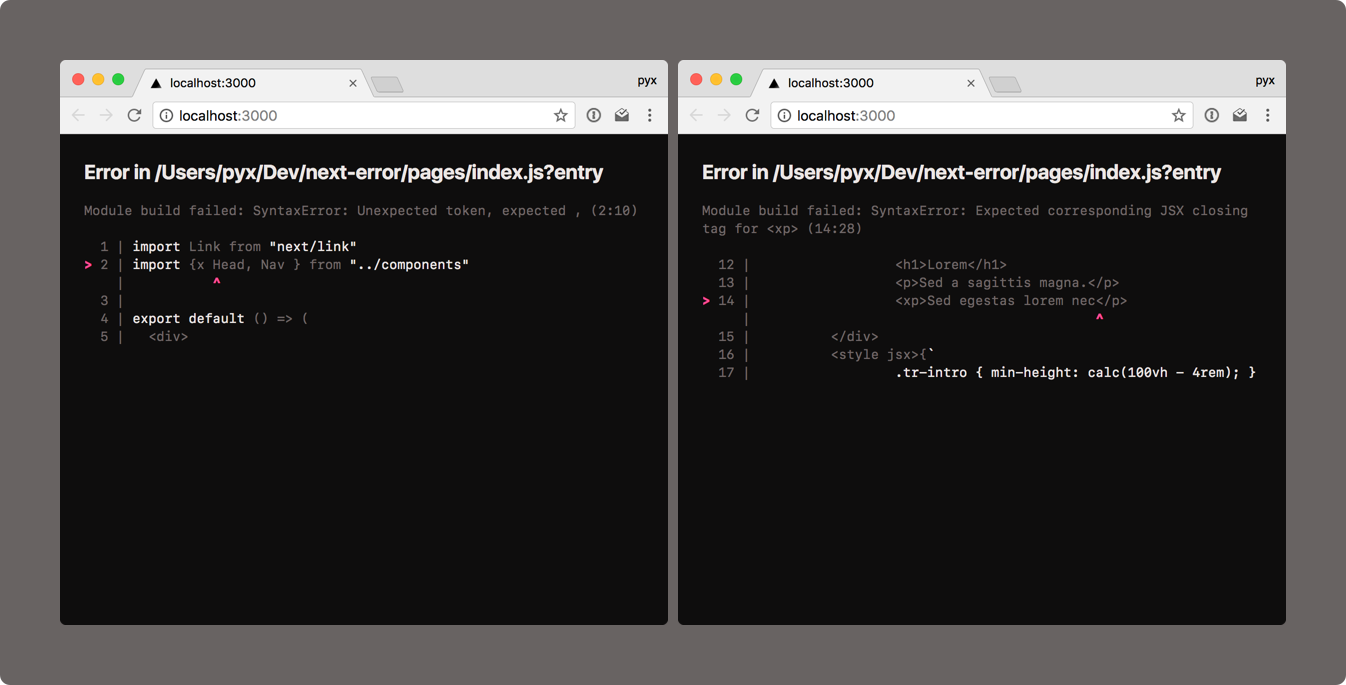
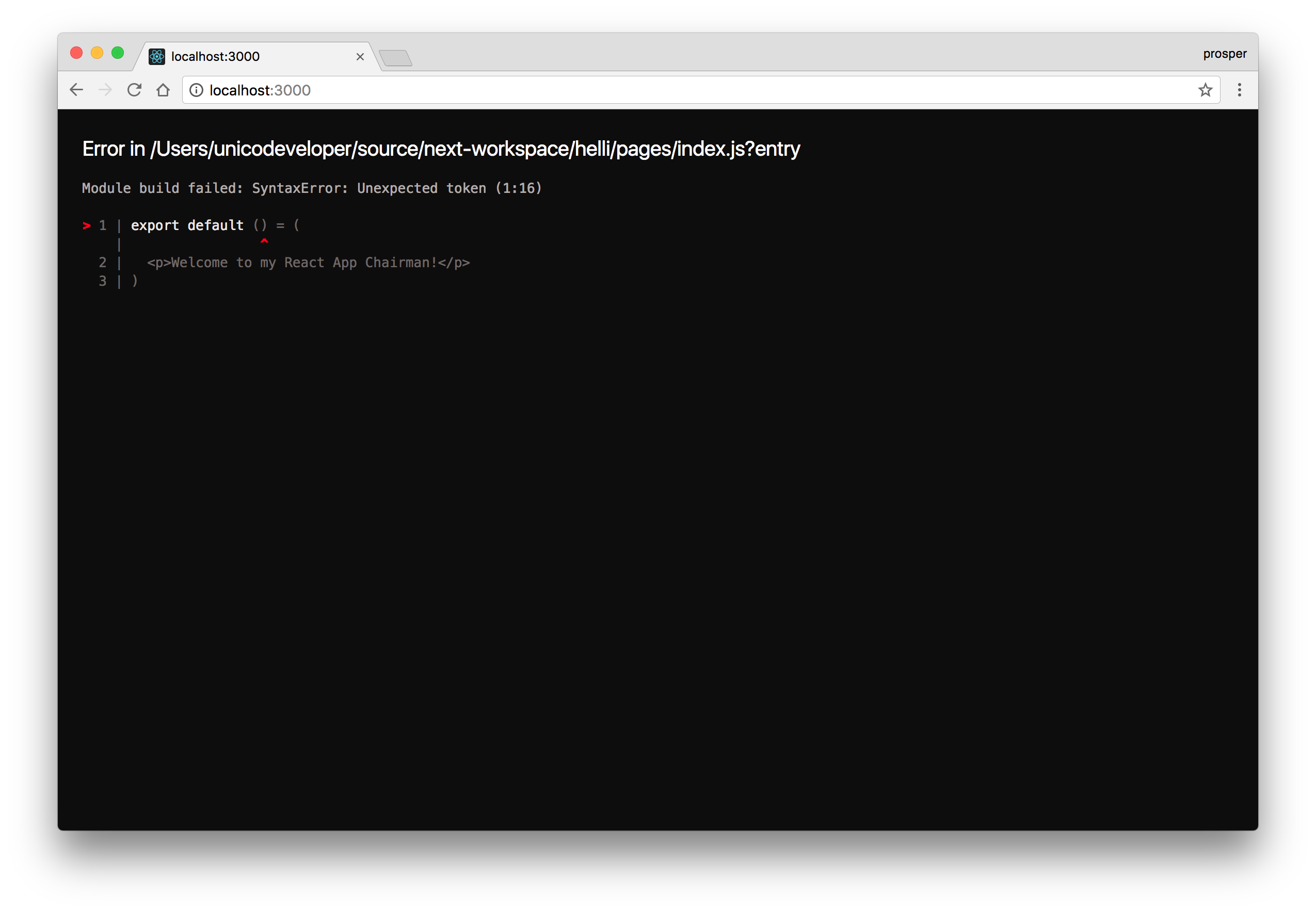
 Source: Zeit
4. Improved Startup Time
Startup time for a Next.js app is now 5 times faster. The bootup time for a typical Next.js 3 app was cut down from 1000ms to about 200ms.
5. Optimized Bundle
The bundle size of Next.js core is now smaller. In fact, here is the webpack bundle analyzer output after optimization:
 Optimized Bundle
6. Improved Hot Module Replacement
Before now, there were some bugs with HMR, (hot module replacement), one of which was the
ERR_INCOMPLETE_CHUNK_ENCODING error that shows up when using Node.js 8.0. That issue has been solved. Yaay!
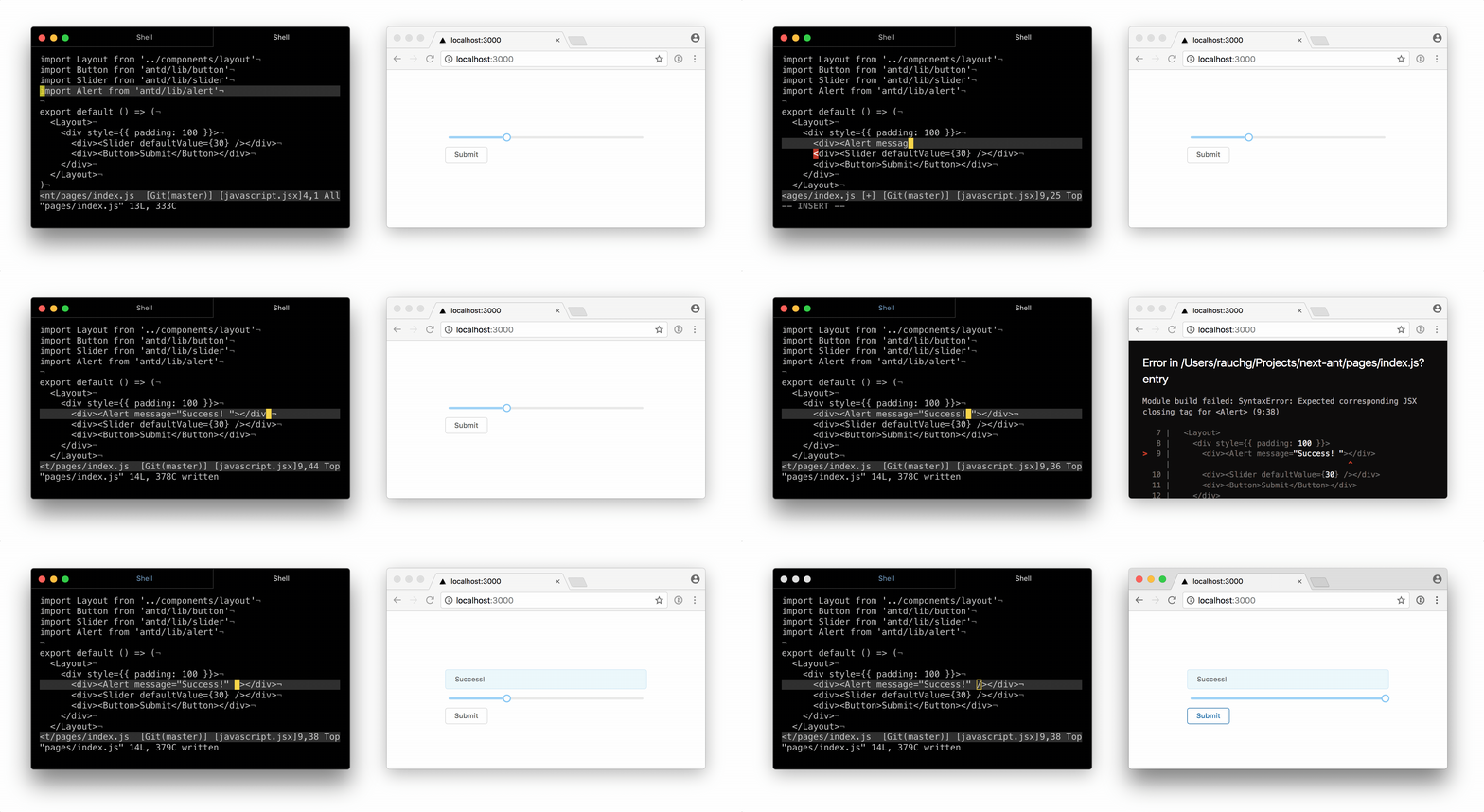
Furthermore, if you return a wrong type, Next.js shows you the right error message and also recovers smoothly from it once the right type is returned.
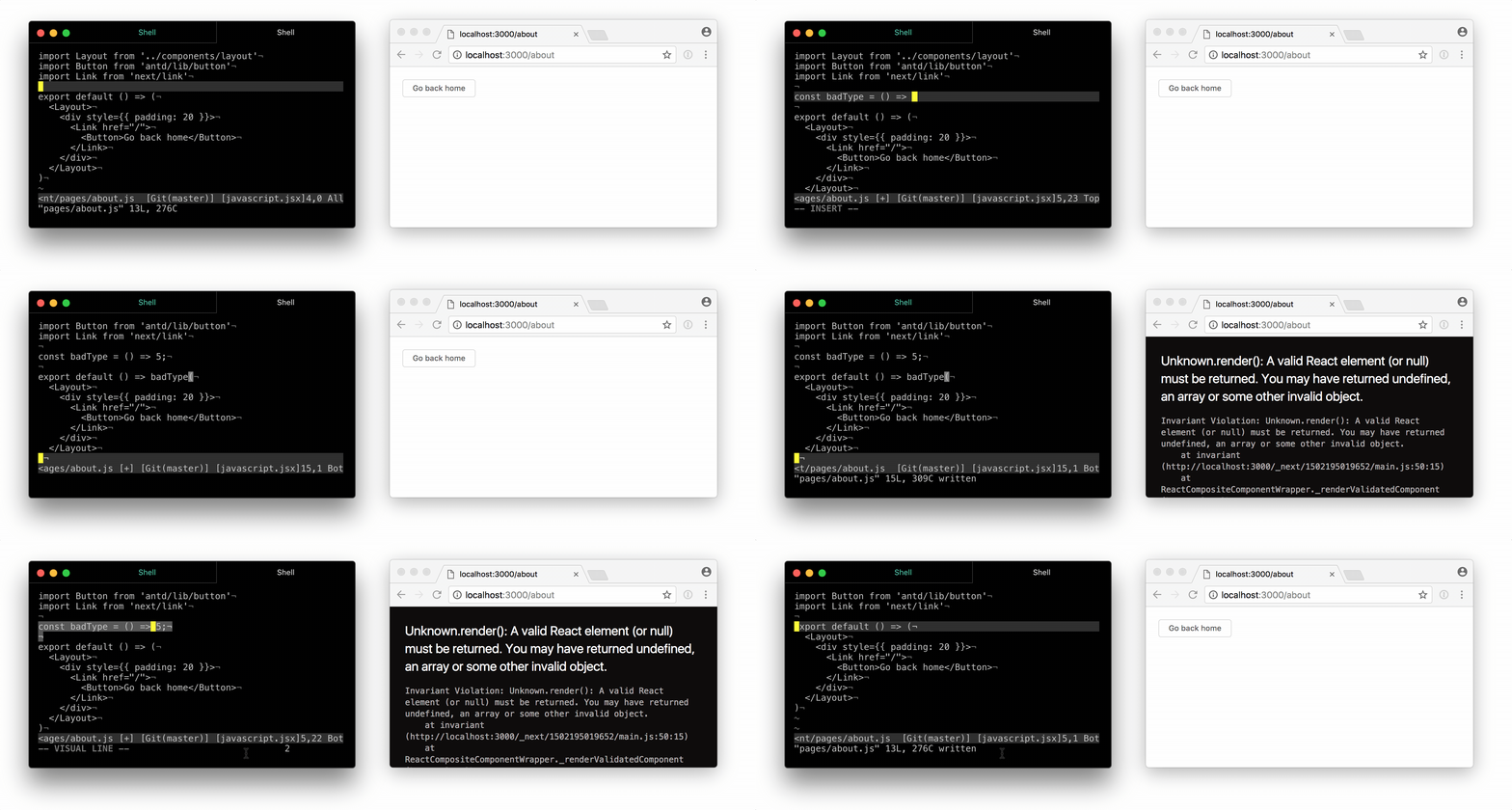 Better Bad Type Returns
One more thing: undefined is not a function is now obsolete. Next.js now correctly identifies any type of runtime error thrown and catches it effectively. A typical example of this scenario can be seen below:
Source: Next.js Blogexample of this scenario can be seen below:
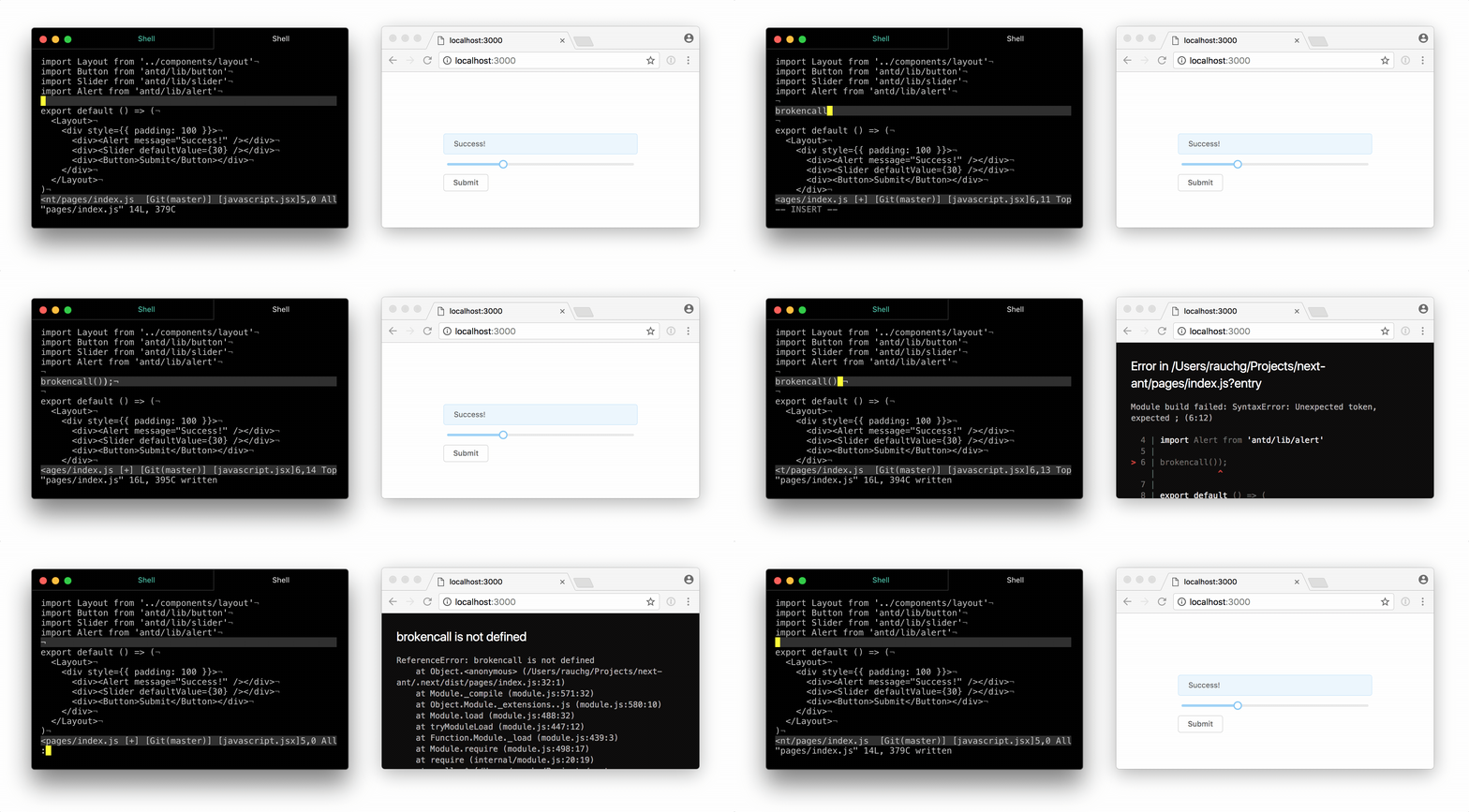 Source: Next.js Blog
example of this scenario can be seen below:
Source: Next.js Blog
Source: Next.js Blog7. Dynamic React Components
Next.js now ships with a powerful opt-in utility called
next/dynamic which helps you to create dynamically loaded React Components easily.
Before now, code splitting was route based. In Next.js 3, you will be able to load code as a function of the data that the user gets.
Note: If the dynamic component is loaded in the initial rendering, server-rendering also works. Awesome!
Conclusion
With Next.js 3, the GitHub repo now has over 16,000 stars and we have seen lots of significant improvements and major upgrades from the initial version that was released last year. Kudos to the team behind this project and the JavaScript community for their continuous support. In fact, they already have plans for Next.js 4.
Comments
Post a Comment